
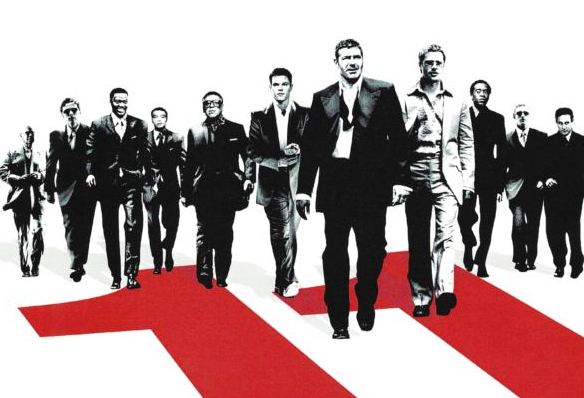
Your characters are ready. They’ve got the schematics. They’ve assembled their team. They’ve acquired all the high-end tech they need. Now, all they have left to do is pull off an epic heist.
Heists are among some of the most common troupes in all of fiction. They’re fun to watch, and even more fun to write. They can bring high levels of suspense and intensity to your story, while also setting the scene for some incredible plot twists. However, they’ve also been done so much that it’s easy for these heist scenes to slip into cliche territory, if not executed well.
How can we do these heists justice in our writing?
Well, first, we have to dive into what exactly makes them tick.
And Ocean’s Eleven, one of the most iconic heist movies of all time, allows us to do just that.
Ocean’s Eleven
Despite having just gotten out of jail, Danny Ocean intends to continue his career as a high-class criminal. But this time, he’s out for revenge. He wants to rob one of the richest Casino owners in LA, not only to gain the money, but also to wound the man who is now dating his ex-wife, Tess. Ocean has a mastermind plan to not only break into one of the most secure vaults in the world, but also to get Tess back.
So, he recruits a team of eleven men, each one an expert in their field. There’s the engineer nerd, the acrobat, the pit-pocketer, and many more who are more than willing to join his crew for a cut of the prize.
Then, after months of prepping and planning, they finally set out to steal over $160 million dollars from one of the richest men in the world.
Two Techniques to Pulling This Off
The plot of this movie is fairly simple. A team of guys set out to rob a vault they’ve been told is impossible to steal from. Despite this simple and relatively predictable premise, there is still plenty of action and exciting plot twists throughout the story. It still feels fresh.
In order to execute a heist plot without boring your reader, there are two common sub-troupes you have to learn about. Then, once you understand the foundations, you’ll be able to build off them and create your own exciting espionage novels. Below are the two most common heist techniques. For each one, we’ll look at the expectations they generate in your reader and also how you can subvert those expectations to keep your heist high-stakes and unpredictable.
1. The Audience Understands What’s Going On
One way to write a heist is by letting the reader in on the plan. In Ocean’s Eleven, most of the movie revolves around the characters crafting their plan, so it makes sense that they would let their audience in on the experience and show them what’s going on. This concept is fairly easy and really isn’t much different from just simply writing your story the way you might expect.
You must be aware of the reader’s expectations when it comes to this technique. You’ve probably experienced this as a reader yourself, so you know what it’s like when the characters start explaining to you their plan. It’s almost guaranteed that this plan is going to go wrong. To be fair, if something didn’t go wrong with the plan, then there wouldn’t be much of a story to tell, would there?
No one wants to watch a heist that is executed perfectly. What makes a heist suspenseful, what keeps readers on the edge of their seats, is when they know what the plan is supposed to be, but they watch as it unfolds in a completely different direction. The stakes are generated from comparing the plan to the actual reality of the moment.
When your audience is in the know, be aware of their expectations and lean into them. Let them know how the heist is supposed to go, and then watch them panic as it goes awry. However, be extremely careful, because most readers will be awaiting some sort of plot twist. If they’ve read enough of this genre, they’ll probably know how your story is going to end. So, in order to set your heist apart from the rest, try…
2. The Audience Doesn’t Know What’s Going On
During the last fifteen or so minutes of Ocean’s Eleven, something about the structure of the movie changes. The audience may have thought they knew the entire plan, but suddenly, a brand new aspect of the heist is revealed. An element of surprise that neither the viewers nor the surrounding characters ever could have guessed: Half of Ocean’s team ends up disguising themselves as a SWAT team in order to gain access to the vault. However, this part of the plan is not revealed until the very end of the movie.
Most readers, because of how common this technique is, will simply see this as a sign that the heist is going well, and most likely grow bored. However, iIf you execute this method well, the stakes will come from wondering how the plot will be resolved, not if.
When you switch things around and suddenly push your audience into the dark, they will continue reading in order to figure out how your amazing heist team completes their mission. However, it is recommended that you don’t use this concept until the very end. That way, your story will remain exciting and fresh without growing dull.
If you plan to write a heist, pay attention to these two sub-troupes. Be aware of your readers’ expectations and either play into them or switch things up in order to surprise them. Whether you let your audience in on the plan or not, keep your heist scene suspenseful and engaging. Keep your reader on the edge of their seats, avoid cliches, and you will do your heist scene justice.



Let us know:
Have you seen these two techniques used in other movies? Which one do you plan to use?


Hello, I’m Sophia! I’m a child of God and I (if you couldn’t tell already) love to write! I’m also a total theater kid and strong dessert (specifically cupcake) enthusiast. For as long as I can remember, I’ve enjoyed both reading and making my own stories. I’m so glad I get to share with you what I’ve learned from some of my favorite (or sometimes least favorite) stories on this blog.
Not a film, but a book I’ve seen this used well in is The Hero’s Guide to Storming the Castle, by Chris Healy. Throughout the story, the plan for the grand heist is revealed to the readers – but when the time comes to put the plan in action, everything starts falling apart – trusted allies betray them, enemies seem to be onto them, and the whole plan seems to be useless. All of this is used very successfully to create suspense – even reading the book for the third or fourth time, I find myself on the edge of my seat.