
Many people get stuck on their novel during the editing stage. Some writers get too overwhelmed by the amount of critique they’ve received from their friends or an editor, while others simply lose interest or time for their story. Editing is a vital process when it comes to writing of any kind, but sadly, only a few know how to properly jump that hurdle.
Most of the time, the struggle of editing arises when the flow of the story is disrupted. Writers may know that certain scenes need to be cut or rearranged, but how do you know what to keep and what to delete? How can you make every beat, not only feel essential but be actually necessary to the structure of your story? How can you make the plot flow effortlessly?
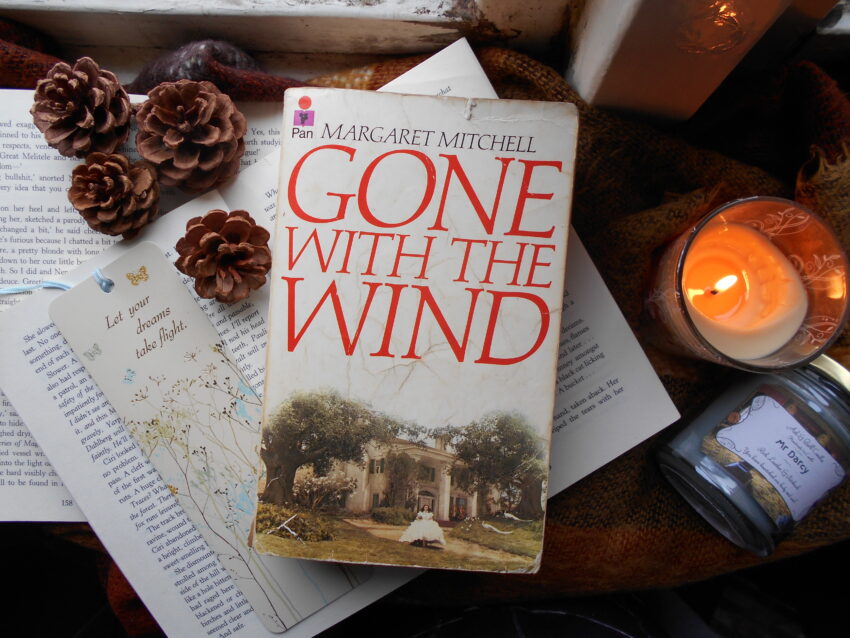
The timeless classic Gone With the Wind by Margaret Mitchell contains the answer.
Gone With the Wind
Scarlett O’Hara is extremely good at flirting, and it gets her into all sorts of trouble. Despite living in Georgia during the Civil War, the impending collapse of the South is nothing but background noise to the protagonist’s ears. She’s more worried about chasing the love of her life, Ashley Wilkes, then she is about the coming war. However, when Ashley marries another woman (Melanie) just days before he joins the army, Scarlett is furious. She could’ve sworn Ashley loved her! So, in an act of vengeance, she spontaneously marries Charlie Hamilton, Ashley’s cousin.
After that, Scarlett’s life is an absolute mess. She is quickly widowed a few months after her marriage, and as a result doesn’t have enough two nickels to rub together. Now, her newborn son, her sisters, her servants, and Ashley’s wife all look to her for food and strength while Ashley is gone to war. A she struggles through this new way of life, the interested eyes of the un-gentlemanly scallawag Rhett Butler are upon her. No matter if Scarlett is poor or wealthy, married or widowed, Rhett, the only person who can match her bitter anger and wit, shows up in every stage of her life. Now, she not only has to deal with invading Yankees and poverty, but also her complex relationship with this mysterious man.
Keep the Story Flowing
If you’ve ever heard anything about this classic tale, you probably know that it’s really, really long. The volume can easily cross 1000 pages, depending on the edition. But how could such a lengthy story still be so good? There are sixty-three chapters, yet each one brings a new perspective on the Civil War to the table and invites you deeper and deeper into the world of the South. Every page is integral to the story. There’s not a word that seems wasted, not a single scene that drags. Every character, every snippet of dialogue, and every long-winded historical explanation is important and comes up again in another section of the novel. How did Mitchell accomplish this?
The answer is fairly simple. She treated her scenes like dominos.
Imagine a line of dominos. This line could be five inches long or fifty yards long, but the concept stays the same: each domino directly affects the one in front of it. If the first one is tipped over then something is going to happen to the rest of them.
Imagine your story like that line. The first scene (or domino) to be tipped over is the inciting incident, which gets the plot moving. The next scene should be the result of what happened because of the inciting incident. Show how your characters react, and what they decide to do next. And whatever your character decides should invoke some sort of change in the setting in the very next chapter. This is how you keep your story flowing. Even if you choose to use foreshadowing in a handful of your scenes, there should still be something there that directly changes the next part of a character’s life.
For example, in Gone With The Wind, the first few scenes begin with Scarlett sitting on the porch with two suitors. They inform her that Ashley Wilkes is rumored to be getting married soon, and because of that, she runs off to meet her father on his way to learn if this is true. When he tells her that this is indeed true, she determines to look extra nice for the Wilkes’ barbeque the next day. And because she dresses extra nice, she catches Rhett Butler’s attention, etc. etc.
Everything, from beginning to end, affects the very next scene. However, this structure does not only apply to long novels or fast-paced action series. In fact, this advice is probably most relevant to people who write short stories or novellas, because those writers can’t get away with any unnecessary scenes. Those kinds of stories are made up of the barest of bones, and need each word to be worth it.
Use this cause and effect method to make your scenes flow into each other easily. Every scene has to have a purpose, and every scene has to directly affect the next one. Set up your novel like a chain of dominos, and your readers will be engaged until the very end.



Let us know:
What story have you noticed use the domino effect to write a tight plot?


Hello, I’m Sophia! I’m a child of God and I (if you couldn’t tell already) love to write! I’m also a total theater kid and strong dessert (specifically cupcake) enthusiast. For as long as I can remember, I’ve enjoyed both reading and making my own stories. I’m so glad I get to share with you what I’ve learned from some of my favorite (or sometimes least favorite) stories on this blog.