
There is a particularly thin line writers have to walk when venturing into the publishing industry. On one hand, their story has to fit into a genre. Writers have to come up with comp. titles and a trope list and all sorts of other materials to convince a publisher (or sometimes, their audience directly) that this book will make sales because ones like it have sold in the past.
On the other hand, their story has to be different from any other. They don’t want to tell the exact same story as everyone else, they just want to be as successful as those other franchises. It has to be creative, unexpected, and new. The audience demands something fresh. In other words, writers often feel the pressure to be unique.
How can writers possibly walk this balance? How can our stories fit into the confinements of a genre, while also being different from any other novel in the industry? Do they really have to be completely unique?
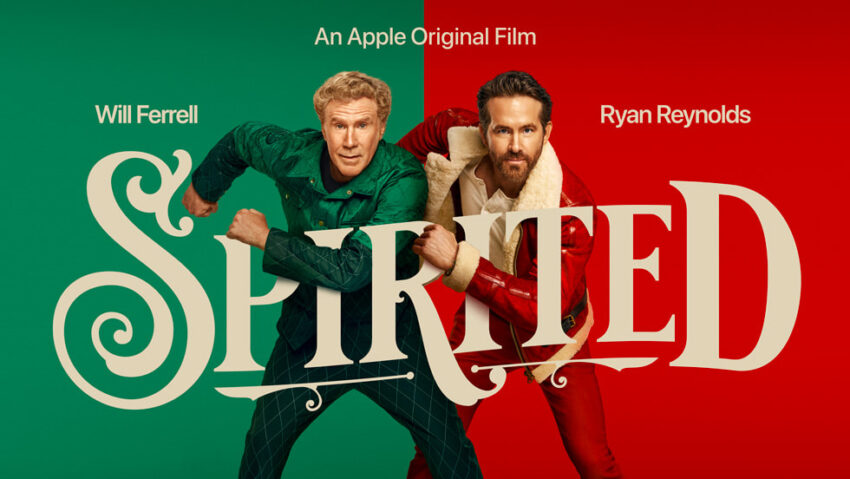
The answer lies in a 2022 Christmas musical Spirited.
Spirited
This story follows an organization of holiday ghosts that I have one job: to change someone’s life once a year. Using the power of Christmas magic (and research), this company picks a horribly unpleasant man or woman, follows them for a year, and then creates a dozen or so sets based around their life. Then, on Christmas Eve, the three head ghosts walk that person through their past, present, and future. If all goes well, they are a changed person by Christmas morning.
These spirits have been doing this for centuries, and are most famously known for convincing Ebeneezer Scrooge to change many years ago. Now, in modern times, the ghost of Christmas Present (or, simply Present) is starting to doubt his role in the world. Sure, he helps change one heart every Christmas, but that doesn’t necessarily ripple out to affect starvation or world peace. This year, Present is determined to make a splash.
Enter this year’s Scrooge: Clint Briggs. He runs a multi-million dollar company that makes its profit off of inciting arguments. His job is to stir up controversy, make celebrities look good, and make their enemies look bad. He gave up believing in mushy things like hope and love long ago, and the only thing that remains in his heart is a stone-cold, sarcastic, eat-or-be-eaten attitude. If the spirits could find a way to change him, it could affect millions of people.
Present sets a plan in motion to change Clint’s life, but when Christmas rolls around, things don’t go to plan and chaos ultimately ensues, throwing the spirits into turmoil. Now, Present has to not only convince one jerk to change, but also keep himself from getting fired and hopefully change the world.
Unique vs. Original
Obviously, this movie is based off of Dickens’ A Christmas Carol. But it isn’t your average Christmas Carol retelling. Throughout the course of this movie, every time you think you know what’s about to happen, another plot twist arises out of nowhere to spin the story on its head again.
Despite all of its twists and turns, however, this movie isn’t unique. It’s another Christmas movie, another musical, and another spin off of Dicken’s famous tale. This doesn’t mean that the movie itself was bad or poorly written. In fact, its premise was ingeniously marketable.
The problem is, people often confuse the word ‘unique’ with ‘original.’ Most people think their story has to be 100% unique and completely different from every other story in order to attract an audience or sell their books. However, once you really look into the publishing industry, you’ll find that this isn’t true at all. In order to market your book, it needs to fit into a genre. It’s like placing yourself on a specific shelf in the bookstore so your readers will know where to find you. If your premise is too unfamiliar and off-the-wall, then there won’t be an audience for it.
Spirited can firmly be placed on the Christmas movie shelf. But, that doesn’t mean it is confined to the typical troupes and cliches expected in that field. Spirited took something the audience was familiar with (Charles Dickens, Christmas, etc.), wrote a premise that aligned with the genre, and then did whatever they wanted to with the plot.
In your story, separate your premise and your plot. Make sure your premise is marketable and aligns with a particular genre that your readers are familiar with, and then go crazy with the actual events in your story. This is a similar concept to the one I mentioned in my Mistwick School of Musicraft article a while back, but in this method, you’re not filling in any gaps or silences. You’re going off of what the readers already know, staying in that genre, and then surprising them with a dozen or so plot twists.
It should be mentioned, however, that while you can (and should!) be creative with your plot, it should still have its limitations. In order to fit into the romance genre, your couple has to have a happy ending, or else it belongs in the tragedy genre. Your cop show can’t suddenly take place in space, or else it’s no longer a cop show. Spirited had an original plot, but it didn’t take place outside of the setting of Christmas Eve/Morning.
When creating a story you want to sell, make sure it already has an established audience. Pick a genre, and stick to it. However, within the folds of your genre throw in the craziest, most upside-down plot they’ve ever seen. Don’t ignore those limitations of the genre, but get creative with them instead. Your story can’t be completely unique, but if you work hard and get creative with the plot, it can be truly original.



Let us know:
What stories have you notice break out of their premise to create original stories? Does your WIP do this, too?


Hello, I’m Sophia! I’m a child of God and I (if you couldn’t tell already) love to write! I’m also a total theater kid and strong dessert (specifically cupcake) enthusiast. For as long as I can remember, I’ve enjoyed both reading and making my own stories. I’m so glad I get to share with you what I’ve learned from some of my favorite (or sometimes least favorite) stories on this blog.
Spirited is such a good film, precisely because it takes something established and uses that basis to surprise you rather than trying to be something totally different. This is part of why I love fairy-tale retellings, as well as love writing twists on classic fairy stories; the way authors can add twists and layers to an existing premise makes them so original and fascinating! Great article!